Storm-Damaged Trees: A Long Beach Homeowner's Guide to Tree Removal
Tree removal in Long Beach, NY, carries unique challenges that Long Island homeowners face after every major storm season. This guide covers how to recognize dangerous storm-damaged trees, when removal is the only safe option, how to navigate your insurance claim, and what to do in an emergency.
Why Long Beach Homeowners Face Elevated Tree Risk
Long Beach sits on a narrow barrier island on Nassau County's South Shore. Nor'easters, tropical systems, and Atlantic storm surge put steady stress on every tree in the city. Sandy soil loosens root systems faster than inland conditions, and years of salt spray can weaken a tree's structure even when it still looks healthy. A tree may have compromised root integrity from long-term coastal stress that only becomes obvious when a storm puts it to the test.
Long Beach is also dense. Tight lots, narrow streets, and closely spaced homes mean a falling tree rarely has a clear path to open ground, raising the stakes for every homeowner on the block.
Visible Warning Signs to Look for After a Storm
Walk your property after any significant wind or rain event and check for these red flags.
- Leaning trunk that was not there before the storm.
- Cracks or splits in the main trunk or at large branch unions.
- Hanging or dangling branches, sometimes called "widow makers."
- Exposed or heaved root ball on one side of the tree base.
- Hollow sections, soft spots, or visible decay in the trunk.
- Large sections of missing bark after limb loss.
Any one of these signs warrants a professional assessment before you assume the tree can stay.
Structural Risk Indicators That Go Beyond the Surface
Some of the most dangerous conditions are harder to spot. Salt air exposure can stress trees in ways only a trained eye can identify. A tree that lost large limbs in a prior storm may have internal decay that was never addressed. Trees growing in sandy soil may have shallow root plates that offer little anchoring in high wind. If a tree is leaning toward power lines, a structure, or the road, even moderate lean carries serious risk. ISA-certified arborists use standardized methods to evaluate failure potential and likely consequences.
When Is Tree Removal the Only Safe Option?
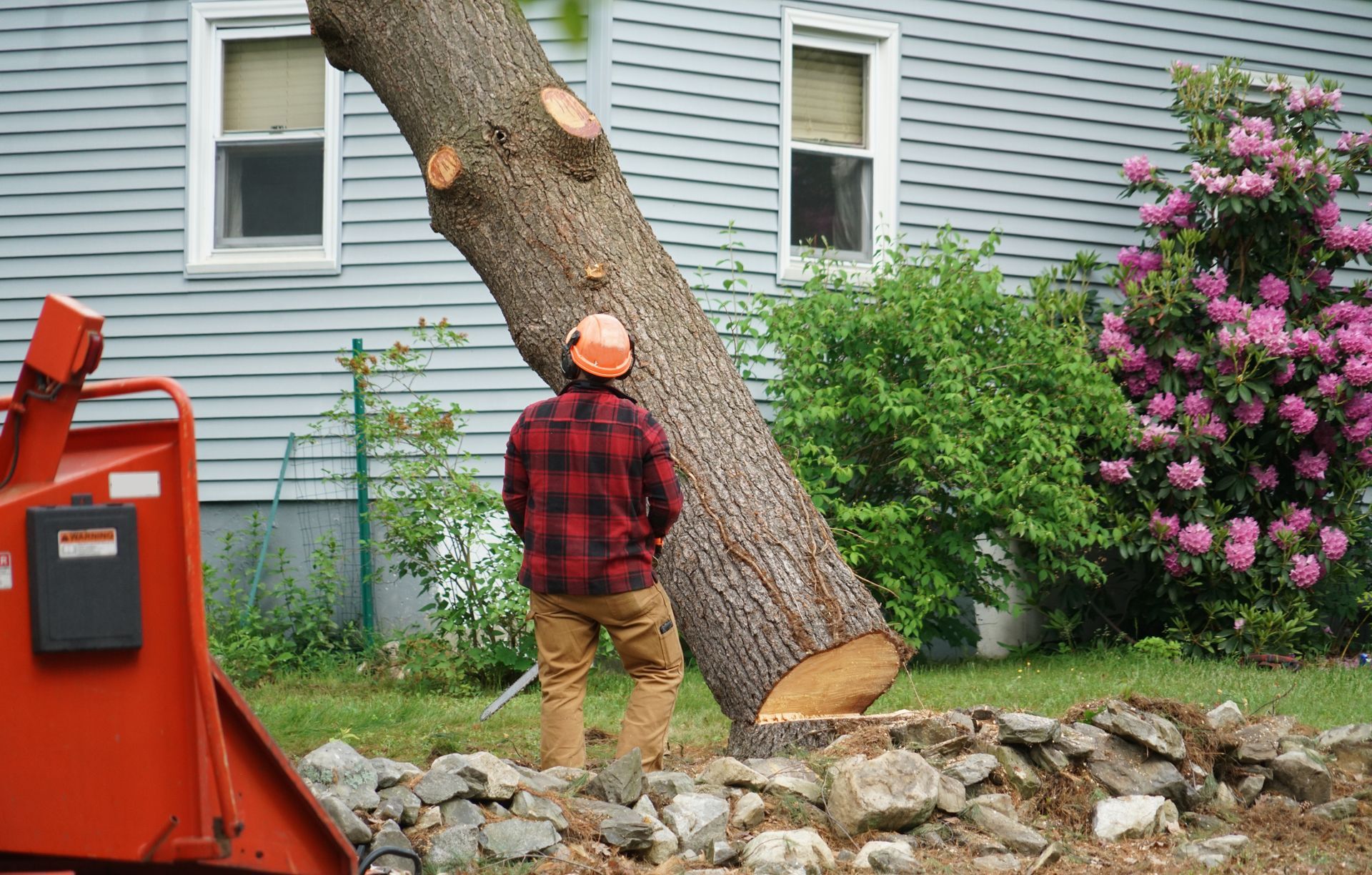
Tree removal becomes necessary when a tree can no longer be made safe through pruning, cabling, or other interventions. A certified arborist may recommend full removal when decay has spread through the main trunk, when the root system has been severely compromised, when the tree has already partially failed, or when proximity to a home, vehicle, or utility line makes failure consequences severe. Tree removal in Long Beach, NY, is often unavoidable after a major storm when multiple trees sustain simultaneous structural damage.
Removal is not always the first recommendation. If a tree can be saved with corrective pruning or support systems, a qualified arborist will say so.
Emergency Response Steps After a Storm
If a tree has fallen or is actively threatening your property, take these steps in order.
- Stay away from any tree near power lines and call PSEG Long Island before anyone approaches.
- Document everything with photos before any work begins, including the full tree, the base, visible damage, and any contact with structures.
- Call your homeowners insurance carrier to report the loss.
- Contact a licensed, insured tree service for emergency assessment and removal.
- Do not allow any crew to start work without first seeing proof of liability insurance and workers' compensation coverage.
Insurance Claim Tips for Storm-Damaged Trees
Most standard homeowners policies may cover the cost of removing a tree that has fallen onto a covered structure such as your house, garage, fence, or vehicle. If a tree falls in the yard without hitting any structure, coverage is often limited or unavailable. On Long Beach's South Shore, storm surge flooding may trigger a separate flood insurance policy, so wind damage and flood damage may each need to be documented as two distinct claims from the same storm event. Photograph the damage thoroughly before removal begins, because once the tree is gone, much of the evidence your adjuster needs is also gone.
Frequently Asked Questions
How Much Does Emergency Tree Removal Cost After a Storm?
Costs vary with tree size, location, and damage complexity, often ranging from a few hundred to several thousand dollars. Ask insurers what they may reimburse.
Do I Need a Permit to Remove a Storm-Damaged Tree in Long Beach?
Emergency removal of a hazardous, storm-damaged tree is typically exempt from permitting. Check with the City of Long Beach or a licensed contractor first.
How Long Does a Storm-Damage Tree Insurance Claim Take?
Timelines vary by insurer and damage extent, but most claims resolve within a few weeks once documentation is submitted and photographed promptly.
Ready to Protect Your Long Beach Property?
Storm season on the South Shore is not a matter of if but when. Knowing the warning signs, acting quickly after a storm, and working with a qualified team can make the difference between a manageable situation and a serious safety incident.
Harder Services has been serving Long Island homeowners for over a century, with ISA-certified arborists and TCIA accreditation backing every job. Explore our full range of tree services in Long Beach, NY, to learn more about what a professional assessment covers. To schedule a free estimate, call (516) 481-8800 today.